- This event has passed.
Designated Rifle Marksman (DRM) / LPVO
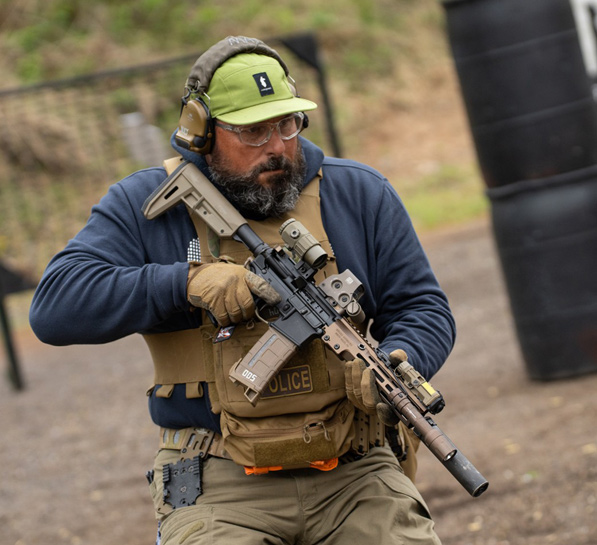
This two-day Designated Rifle Marksman (DRM) course is built for law enforcement officers and SWAT operators who deploy a carbine equipped with an LPVO or magnifier. Students will develop the ability to positively identify and accurately engage threats at distances out to 200 yards while operating in perimeter, containment, and overwatch roles.
This is not a sniper course and is not intended to replace law enforcement sniper training or sniper team responsibilities. The focus is on building a perimeter-capable operator who can extend the effective employment of the patrol rifle beyond standard iron-sight or red-dot distances.
Students will leave the course better prepared to identify threats at extended distance, deliver accurate and accountable fire, and perform in real-world perimeter and overwatch assignments.
Course Description
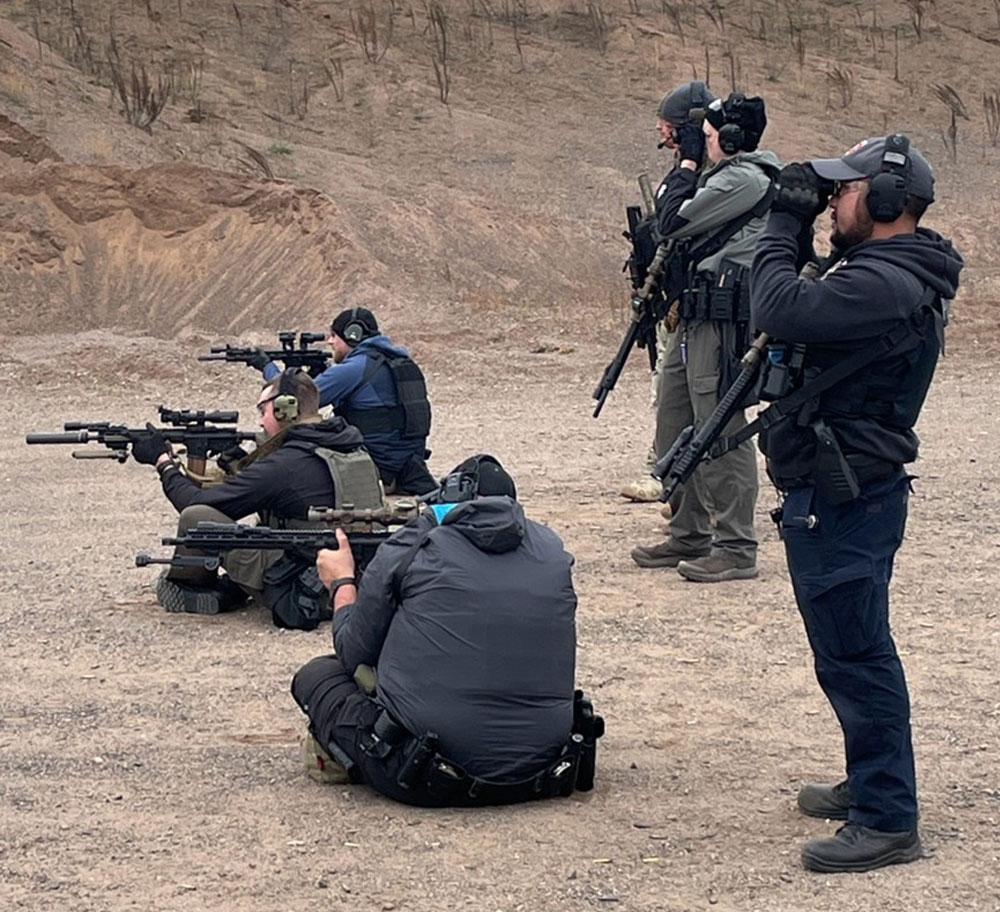
Instruction is delivered through lecture, demonstration, and live-fire application. Approximately 80% of the course is practical, with drills and performance standards designed to reflect operational demands.
This is not a benchrest class. Students should expect to shoot, move, and perform under time pressure.
Student Learning Outcomes
- Apply and refine rifle marksmanship fundamentals, including stance, grip, recoil control, trigger management, and follow-through.
- Positively identify and accurately engage threats out to 200 yards with an LPVO- or magnifier-equipped carbine.
- Understand the advantages, limitations, and employment considerations of LPVOs, magnifiers, reticle use, holds, and magnification management under stress.
- Recognize how ammunition selection affects precision, consistency, and terminal performance.
- Understand the role, responsibilities, and deployment considerations of the Designated Rifle Marksman in perimeter, containment, and tactical team operations.
Methods of Evaluation
- Two rifle qualification courses
- One written test
- End-of-course written critique
This is a performance-based course. Students are expected to meet established standards.
Methods of Instruction
- Classroom lecture and briefings
- Practical application
- Live-fire training
Prerequisites and Student Expectations
- Students should arrive weapon-competent, physically prepared, and ready to train.
- This course includes multiple live-fire drills involving movement and short bursts of speed. Students must be physically capable of full participation.
- Any student who cannot safely participate in live-fire training may be removed from the firing line or dismissed from the course.
Required Equipment
- .223/5.56 to .308/7.62 carbine equipped with an LPVO, fixed magnified optic (ACOG/ELCAN), or red-dot/magnifier combination
- Minimum of four rifle magazines and magazine pouches (belt, leg, or chest mounted)
- Soft body armor or plate carrier
- 600 rounds of rifle ammunition (ammunition should be capable of approximately 3 MOA at 100 yards)
- Duty handgun & holster
- 50 rounds of pistol ammunition